
USDA Eligibility Map
How to Qualify for a USDA Loan in Michigan?
If you’re being pulled toward the attractive features of a USDA Loan, whether it’s the competitive interest rates or zero down payment opportunities catching your eye, it’s important to pinpoint your rural development eligibility before moving forward in the loan approval process.
Eligible borrowers and their selected property should meet the following requirements:
- The property in question must be in an eligible location
- The property must also be a single-family, owner-occupied home
- Borrower’s income must be below USDA-set limits (based on your area)
- Minimum FICO score of 620
- Property cannot be a working farm
- The property’s appraisal must meet USDA standards
Use the Interactive USDA Eligibility Map
Check the USDA Eligibility Map
- Eligible area
- Not eligible
This tool is a representation of the USDA Rural Development Single Family Housing eligibility map, for general informational purposes only. It is not a final determination of property eligibility. Only USDA Rural Development can make that determination, upon receipt of a complete application. Property location is one requirement among several — household income limits, occupancy and property standards, and other program rules also apply. View the official USDA eligibility map.
Before exploring any of the other eligibility parameters, like income or down payments, you’ll want to check Neighborhood Loans’ interactive USDA eligibility map to make sure the property you’re thinking of purchasing is in an approved location for RD eligibility.
This interactive map, built by Neighborhood Loans, delineates areas deemed rural or semi-rural, determining eligibility for USDA Loans using data pulled directly from the USDA’s official eligibility map. It highlights regions where borrowers can access affordable mortgage options with low or no down payment requirements. By referencing this map, potential homebuyers can identify eligible locations and explore their homeownership opportunities. This tool ensures that individuals and families in rural communities have access to financing, promoting economic development and stability in these areas across Michigan.
The Top 4 Benefits of USDA Loans
RD Loans offer a plethora of attractive benefits, but the most prominent include:
- 0% down payment
- Closing costs can be included in the loan
- More lenient borrower qualifications than other programs
- Minimum credit score of 620
What Areas Near Grand Rapids Qualify for Rural Development Loans?
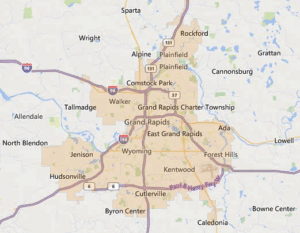
As you might have figured, Grand Rapids isn’t exactly considered rural, especially not in the eyes of the USDA. The city has a profound population and exceeds the limits for RD eligibility. Still, despite the heart of Grand Rapids and its immediate suburbs lacking that RD eligibility, there are plenty of nearby towns that do qualify for USDA Loans, including:
- Allendale
- Lowell
- Caledonia
- Marne
- Rockford
- Sparta
- Alaska
Additionally, There Are Cities in Northern Michigan That Are Eligible, Such As:
- Traverse City
- Frankfort
- Big Rapids
- Marquette
- Manistee
- Mackinaw City
- Gaylord
- Cadillac
- Escanaba
- Ludington
- Clare
- Houghton
Elsewhere in Michigan, cities like Holland, Grand Haven, Muskegon, Lansing, East Lansing, and Mount Pleasant are all ineligible, but there are surrounding areas near each that may be eligible.
The USDA Income Restrictions for Michigan in 2026
RD eligibility encompasses income limits for applicants, which vary depending on the size of the family. For 2026 in Michigan, the limits are:
- Family size of 1-4 people: $122,800
- Family size of 5+ people: up to $162,100
How Accurate is the USDA Eligibility Map?
The USDA eligibility map is run and maintained by the US government, ensuring its accuracy.
What Does USDA Consider a Rural Area?
The USDA defines a rural area as any location that “consists of open countryside with population densities less than 500 people per square mile and places with fewer than 2,500 people.” This classification encompasses small towns, villages, and countryside regions, aiming to support economic development and provide access to affordable housing in less densely populated areas. USDA Loans allow individuals and families in these rural communities to secure financing for homeownership, underscoring the USDA’s commitment to fostering growth and stability in less densely populated areas.
Are Small Towns Considered Rural?
Small towns are typically considered rural by the USDA for the purposes of eligibility for USDA Loans. However, what constitutes a small town is, at the end of the day, a little bit subjective. Because of this, the USDA caps the defining line for eligibility at towns with 50,000 or more residents. This classification includes small towns, villages, and countryside regions. By extending loan programs to these rural communities, the USDA aims to support economic development and provide access to affordable housing options in areas with lower population densities, helping to bolster growth and stability in smaller towns across the United States.
See If You Qualify for a USDA Loan in Michigan
Ready to explore your homeownership options in Michigan? Start by finding out if you qualify for a USDA Loan – our lenders at Treadstone can help determine your eligibility! With our expertise in navigating USDA Loan requirements and extensive knowledge of Michigan’s housing market, we’ll guide you through the process seamlessly. Whether you’re in a small town or rural area, we’re here to help you secure financing for your dream home. Don’t miss out on this opportunity for affordable homeownership – contact Treadstone today to see if you qualify for a USDA Loan in Michigan and take the first steps toward affordable homeownership.
Frequently Asked Questions About USDA Loans and the Eligibility Map
How do I check if a specific address is USDA eligible?
Enter the property address into the USDA eligibility map above. The map shades ineligible areas and leaves eligible areas clear, so you get a yes or no on the property in a few seconds. Keep in mind that the map only answers the property question. Your household income and credit still have to fit USDA guidelines for the loan to work.
What areas in Michigan qualify for a USDA Loan?
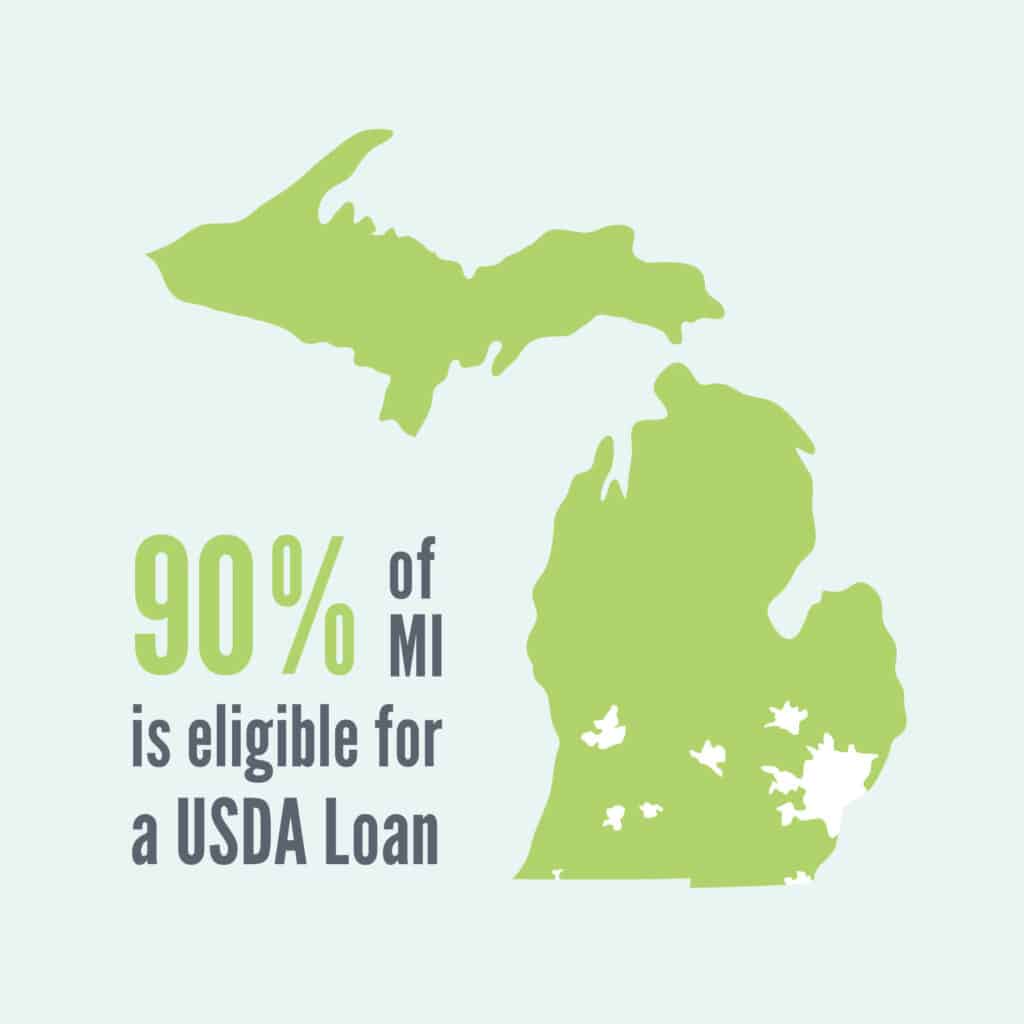
Most of Michigan outside the core of its larger metro areas is eligible. Around Grand Rapids, communities like Rockford, Sparta, Cedar Springs, Middleville, Hastings, Belding, Greenville, and Saranac are generally in eligible territory, while the built-up areas of Grand Rapids, Wyoming, and Kentwood are not. Eligibility is drawn by boundary, not by city name, so two homes a mile apart can get different answers. Always check the exact address.
How do I find USDA eligible homes for sale?
There is no MLS filter for USDA eligibility, so the practical approach is to pull up the eligibility map, note which townships and neighborhoods are clear, and have your real estate agent search within those boundaries. Once you find a home you like, run the address through the map before you write an offer.
How often is the USDA eligibility map updated?
USDA reviews rural area designations after each decennial census, and Congress has repeatedly extended the existing boundaries in the meantime. In practice the map can change with little public notice, and an area that is eligible today may not be eligible after the next update. If you are looking in a borderline area, check the map again before you write an offer.
Do USDA Loans require PMI?
No. USDA Loans do not carry private mortgage insurance. They do carry two USDA fees instead: an upfront guarantee fee of 1% of the loan amount, which can be rolled into the loan, and an annual fee of 0.35% of the loan balance, paid monthly. USDA sets both each fiscal year. For most borrowers those fees come in lower than FHA mortgage insurance on a comparable loan.
What credit score do you need for a USDA Loan?
USDA itself does not set a minimum credit score. Most lenders apply their own overlay around 640, which is the point where a file can typically run through USDA’s automated underwriting system. Scores below that are not an automatic no, but the file usually goes to manual underwriting and needs stronger compensating factors. Talk with a Loan Officer before you assume you are out of range.
Can you build a house with a USDA Loan?
Yes. USDA offers a single-close construction-to-permanent option, though far fewer lenders offer it than offer standard USDA purchase loans. The property still has to sit in an eligible area, and you still have to meet the income limits. If building is your plan, bring it up early, because the timeline and documentation look different from a standard purchase.
Can you buy land with a USDA Loan?
Not on its own. A USDA Loan finances a home, not a bare lot. Land comes along when it is part of the property you are buying or building on. USDA does not set an acreage limit, but the site has to be typical for the area based on the appraisal and comparable sales, and it cannot be used primarily for income production.
Are condos and manufactured homes eligible for USDA Loans?
Both can be. A condo is eligible if the project is approved or accepted by HUD/FHA, VA, Fannie Mae, or Freddie Mac. Manufactured homes are eligible with extra conditions: the home has to be permanently affixed to a foundation and titled as real property, a new unit must be under 12 months old and never occupied, and an existing unit must have a manufacture date within 20 years of your closing date. Worth confirming with a Loan Officer before you get attached to a specific property.
Is there a loan limit on a USDA Loan?
USDA does not publish a maximum loan amount the way FHA and Conventional Loans do. Instead, your household income limit and your debt-to-income ratio set the ceiling. In practice that means how much you can borrow is driven by what you earn and what you owe, not by a fixed cap.
Can I get a USDA Loan if I already own a home?
Sometimes. USDA Loans are for owner-occupied primary residences, and the program is aimed at buyers who do not already own an adequate home. If you own a home you are selling, or own a property that no longer fits your household, you may still qualify. Owning a second home you intend to keep generally rules it out.
Are USDA Loans fixed rate, and can you refinance one?
Yes on both counts. USDA guaranteed loans are fixed rate with a term of at least 30 years. Adjustable rates, balloon payments, and prepayment penalties are not allowed in the program. You can refinance a USDA Loan later, including through USDA’s streamlined refinance options, which can lower your rate with less documentation than a standard refinance. Refinancing into a Conventional Loan is also an option once you have enough equity to drop the annual fee.
How long does it take to close a USDA Loan?
Plan on a timeline similar to a Conventional Loan, with one extra step. After your lender underwrites and approves the file, it goes to USDA’s state office for a final commitment. That state review usually adds a few days, though the wait stretches during busy periods and government shutdowns. Building a little cushion into your purchase agreement is smart.
Terms and qualifications are subject to underwriting approval and can change without notice. Not all borrowers may qualify. Credit score and down payment examples are for illustrative purposes.
Check out your USDA Eligibility Before Applying for a Loan!

